
Construction Project Story Copy: Turn Records Into a Credible Narrative
A project-story writing method that connects the narrative to records and keeps the contractor’s role accurate.

- Market
- Contractors
- Service
- Website Systems
- Year
- 2026
- Focus
- Content Marketing
Construction project story copy should connect a documented starting condition, the company’s role, a meaningful decision and the evidence available afterward. A sequence of attractive photographs is not enough to establish that account.
This breakdown follows the editorial handoff from project records to a publishable narrative. It is useful for contractors commissioning portfolio content when the raw material is spread across photographs, notes and conversations.
Build construction project story copy from a source map

Choose one business question
A project story does not need to explain everything that happened on a job. Choose the decision a future buyer needs to understand. That might be the effect of retaining an existing opening, coordinating a specialist contribution or approving a material change.
Ask the project record owner to identify the relevant constraint and what the company was responsible for. Keep a recorded fact separate from an opinion about what might have happened without that decision.
Make the contribution explicit
A contractor may have installed a component without designing the whole space. Another party may have selected the material or managed other trades. State the contribution clearly before describing the decision and its practical effect.
For a story intended for Tampa Bay buyers, include a location only when the project record supports it and publication permission allows it. A useful regional example does not require an address or private customer details.
Tie each sentence to usable evidence
Use project notes, approved photographs, documented changes and a factual interview to build the account. A photograph can show a visible condition. It cannot independently establish cost savings, compliance or a revenue outcome.
Keep quotations exact and permission-aware. Where a figure or performance claim lacks a reliable record, describe the decision and its scope instead of inventing a number.
Turn construction project story copy into an approved page
| Narrative element | Record to request | Writing check |
|---|---|---|
| Starting condition | Dated notes or approved images. | Describe only what the source establishes. |
| Responsibility | Agreed scope or verified project account. | Name the business’s contribution. |
| Decision | Approved explanation and relevant change record. | Explain the reason without invented motives. |
| Outcome | Completion record or properly attributed evidence. | Separate delivered work from measured performance. |
The handoff should contain the story draft, caption list, source notes, permission record, SEO fields and contextual links. Ask the writer to flag unresolved facts before the owner approves publication. That preserves a clear boundary between editorial work and the company’s factual sign-off.
The contractor project portfolio guide covers the library around the story. Use the contractor copywriting interview brief to collect the missing explanation.
Keep the page useful after launch
Link the story to the service it actually demonstrates. Give a prospective buyer enough context to judge relevance before making contact. A project with a similar visual style may still involve a different scope from the reader’s request.
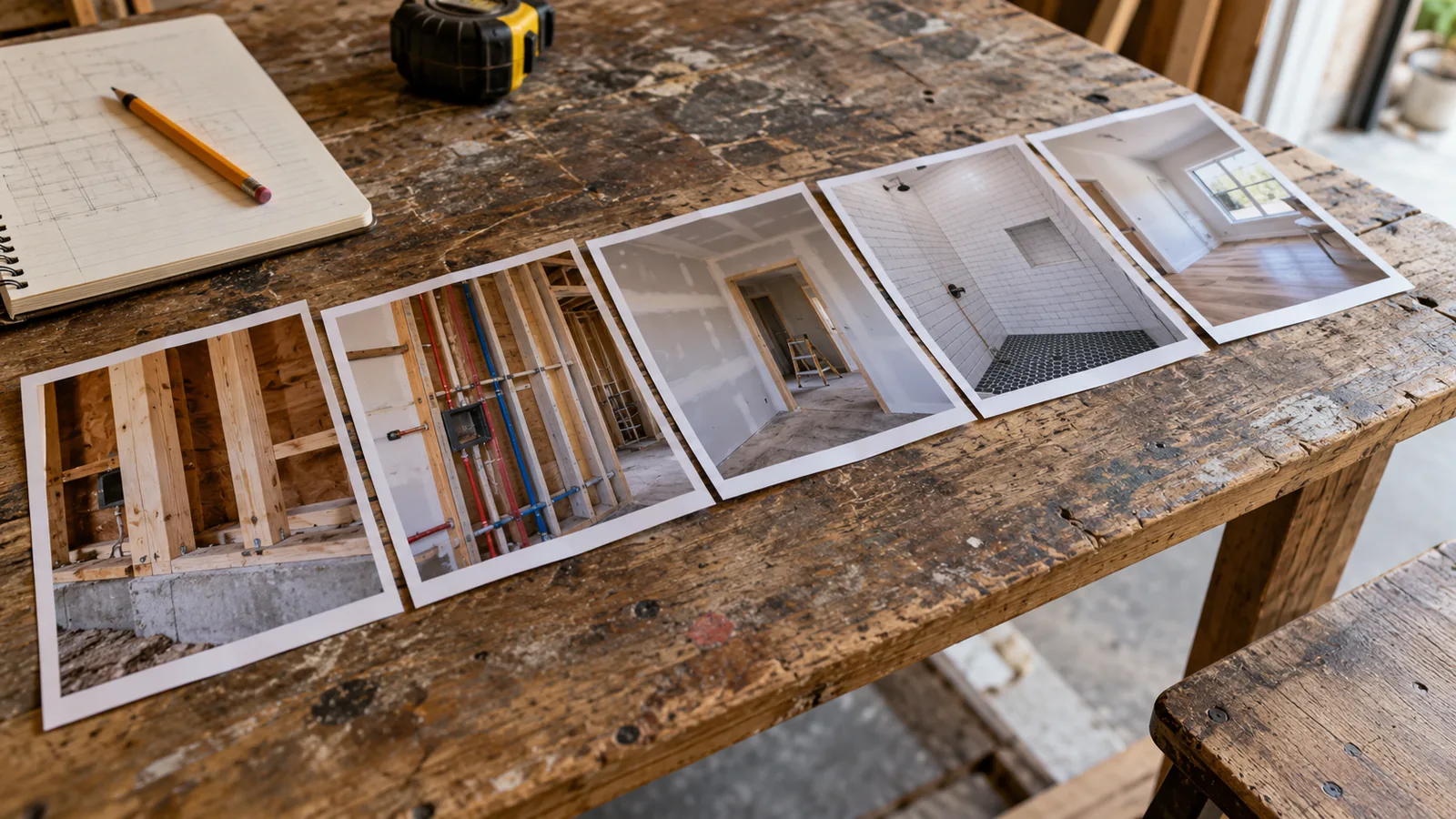
Check captions and image order in the published layout. If a photograph shows an earlier phase, identify the phase; do not let its position imply that it is the finished result. Use accurate alternative text and keep important explanation in readable text.
What the method establishes
At approval, check that every project-specific claim has a source and a responsible reviewer. Keep any search or inquiry measurements separate from the project narrative, with their reporting period and definitions recorded. This makes later updates easier to assess.
The practical lesson is to make the decision understandable before making the story impressive. Readers can assess a specific contribution with clear evidence more readily than a dramatic narrative filled with unverified outcomes.
Send RenForge the project records and the role you want the website to explain. We can discuss a portfolio-writing scope, the necessary approvals and the publishing handoff.