Tampa Roofing Brand Launch: A Focused Identity Plan
A proposed Tampa roofing brand launch: prioritize a clear service message, reusable identity files, a useful website and a testable first inquiry route.

- Market
- Roofing
- Service
- Brand Systems
- Year
- 2026
- Focus
- Content Marketing
A roofing brand launch should make a new business easy to identify and contact before it adds a large collection of marketing assets. This Tampa planning scenario considers a small residential roofing team preparing its first public identity. The proposed outcome is a focused launch kit and a working inquiry path, with no claim of completed client work or measured results.
Study status: This is a hypothetical planning example, not a completed client project. No measured client results are claimed.
The roofing brand launch brief: a clear offer before more assets
The hypothetical owner has a name, several logo sketches and a long wish list: a website, uniforms, full vehicle wraps, social graphics and printed brochures. The team has not yet documented the service offer or first customer handoff. Ordering everything now would repeat those unresolved decisions across more surfaces.
The proposed discovery would confirm the actual services, coverage and contact process. The owner would identify who approves claims and who responds to requests. Any credential, manufacturer relationship or response promise would need verification before it appeared in the launch materials.
This scenario uses Tampa as market context, not as evidence of a RenForge office or a completed roofing project. Before production, RenForge would review the decisions with the real business.
The proposed solution: one message and a minimum useful kit
First, the team would prepare a one-page brief: intended customer, real service focus, first inquiry step and evidence available at launch. The designer would then create an identity that works in a small header, on a shirt and on a proposal.
Next, the launch website would explain the services and where requests are accepted. It would not display concept roofs as completed projects or borrow another company's reviews. Where proof is not yet available, the page would explain the process accurately rather than filling the gap with unsupported badges.
The kit would contain approved artwork, a proposal cover, a readable contact card and the essential website components. Then, larger physical production would follow once the initial applications passed review. The order is about making decisions reusable, not promising that a small kit always costs less.
| Stage | Deliverable | Approval gate |
|---|---|---|
| Foundation | Service brief and one clear message | Owner confirms facts and response process |
| Identity | Named file package and small-size variants | Actual-size application review |
| Public launch | Website and first inquiry route | Mobile task and delivery tests |
The acceptance review: identify, understand and request
A reviewer would read the name at actual display size, identify the service from the first screen and find the next step on a phone. The owner would check every contact detail and service statement. A failed task would return to the revision list.
An authorized test request would check validation, confirmation and delivery to the responsible inbox. A confirmation would acknowledge receipt without inventing an appointment or response time. Staff would label test records and exclude them from business results.
The launch record would include approved files, account owners and the maintenance responsibility. This creates a concrete handover instead of leaving the new business dependent on a presentation deck.
What would be measured after launch
After the roofing brand launch, the team would track whether relevant pages appear in Search Console, which queries reach them and whether delivered requests match the service area. Early numbers may be small, so the report would show counts and context rather than a dramatic percentage claim.
Customer questions would guide the next content investment. If people repeatedly ask how an assessment works, that answer would deserve attention before another decorative asset. The team would record the source, decision and proposed change.
This plan reports no measured ranking, revenue or lead lift. Its deliverables are a usable identity kit, an accurate website and a tested first handoff.
Questions roofing businesses ask
Is this a completed Tampa client project?
No. It is a proposed planning scenario showing how a roofing brand launch could be scoped and tested.
Why delay some branded assets?
The plan resolves the service message and core applications first, so later production uses decisions that have already been reviewed.
RenForge Studio supports roofing and other service businesses with business website systems, branding, SEO and digital marketing. Explore branding and website service scope, or share your website and branding priorities to discuss a suitable next step.
Related practical resources
- Roofing Branding: A Practical Guide for Growing Roofers
- Roofing Branding Cost: Build a Brief Before Buying a Package
- Roofing Brand Guidelines: A File, Print and Website Handoff Checklist
Sources and image note
The worksheets and proposed decisions above are original RenForge planning tools. The following sources support the branding, accessibility or search principles discussed.
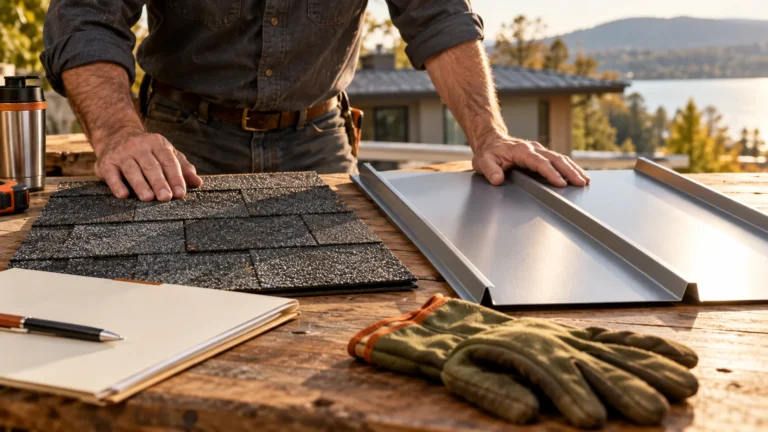
Featured image: an original concept illustration for RenForge Studio. It does not document a verified client, completed installation or local property.