Roofing Web Design: Help Visitors Choose the Right Service
Explore a roofing web design plan that separates repair, replacement and material questions, with clearer service pages and practical launch tests. Planning example.

- Market
- Roofing
- Service
- Website Systems
- Year
- 2026
- Focus
- Website Strategy
Roofing web design works better when a visitor can recognize the service they need. This study considers a Tampa Bay roofer whose broad services page leaves repair, replacement and material questions in the same long list. The proposed change is a clearer decision path from the first visit to a relevant conversation.
Study status: This is a hypothetical planning example, not a completed client project. No measured client results are claimed.
The brief: turn a broad service list into useful choices
In this hypothetical business, the team installs shingles and metal roofs and assesses repair requests. A homeowner with a leak needs different information from someone planning a replacement next year. Giving both people the same generic estimate button leaves the office to recover the missing context.
The proposed brief starts with the business facts: work the team accepts, roof systems it handles, actual coverage and how requests reach staff. Those facts come before page names or a visual theme. A website should not advertise a material, emergency response or warranty merely because another roofer does.
RenForge would map a small set of customer tasks against the existing pages. Useful URLs would stay. A new page would earn its place by answering a distinct question in enough detail to help someone decide. A separate page for every possible keyword would add maintenance without a clear customer benefit.
The proposed roofing web design: three paths, one consistent handoff
The service overview would explain the available routes in plain language. Repair would cover the assessment process and information to share. Replacement would cover the planning conversation, scope and proposal stage. A material guide would help a visitor compare questions to ask without pretending to diagnose a roof from a screen.
Each page would open with the service, the situation it addresses and what happens next. Evidence would sit beside the relevant claim: approved project photographs, verified credentials and accurately described work. Generic badges would not stand in for facts the business can support.
The table below is an original planning example. It illustrates page decisions rather than a measured customer journey. The same principle can guide roofing website design for residential and mixed-service businesses: explain enough to make the next action feel reasonable.
| Decision area | Proposed review |
|---|---|
| Repair question | Explain assessment and ask for a short issue description |
| Replacement planning | Show the consultation steps and proposal inputs |
| Material comparison | Explain options and link to the relevant service |
How the design would be tested before calling it successful
A reviewer would start on a phone at the service overview and try three tasks: find repair information, learn about replacement and ask a material question. The record would note unclear labels, dead ends and whether the destination matches the link. Any blocked task would return to the design list.
The inquiry form would identify the service of interest and property city without demanding information staff do not need yet. Its confirmation would acknowledge a request, not promise an appointment. Contact details would reach a named recipient through a tested delivery route.
After launch, the proposed review would compare page-level search queries with actual inquiry categories. More visits to a replacement page would be useful only if the service and coverage fit. No traffic, revenue or ranking result is claimed here; the deliverable is a testable service navigation plan.
Practical acceptance checklist
- Confirm services and coverage with the roofing team.
- Give each useful page one clear purpose.
- Use descriptive links between the overview and service details.
- Test the full request route on a phone.
RenForge Studio builds business website systems and provides branding, SEO and digital marketing support for roofing, contractors, HVAC, real estate and service businesses. Explore the service scope or share your website and priorities for review.
Related reading: Choosing contractor web design services.
Sources and image note
Primary guidance used for the principles above. The planning worksheets and proposed workflows are original applications to the illustrative scenario.
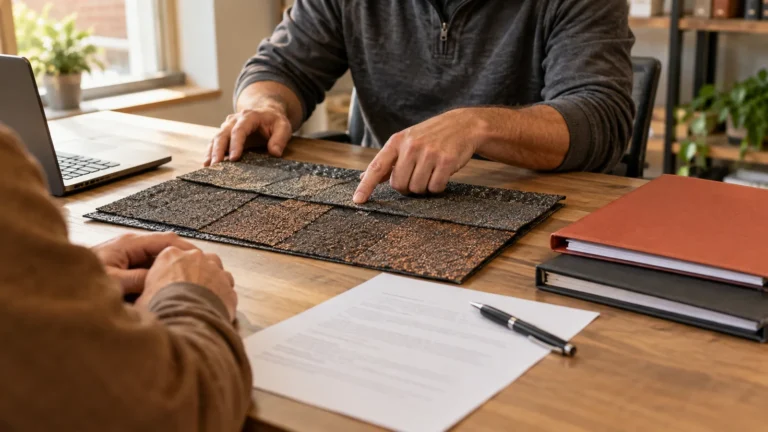
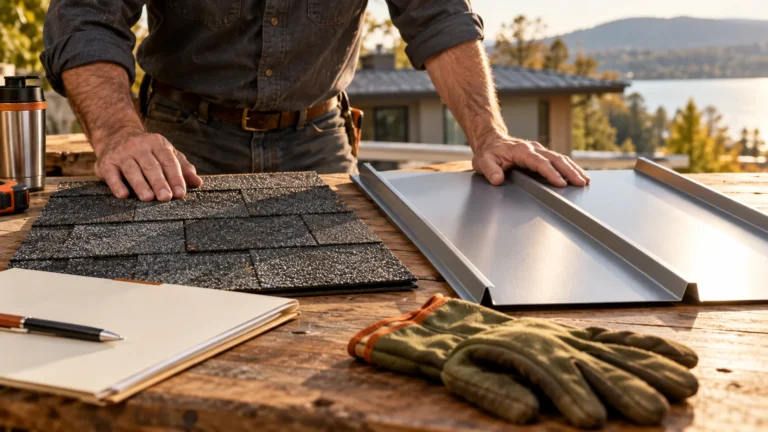
Featured image: an original photorealistic concept created for RenForge Studio. It illustrates the subject and does not depict a verified client, completed project or documented local property.