Brandon Roofing Truck Branding: Connect Recognition to the Website
A proposed Brandon roofing truck branding plan connects a readable vehicle identity to a matching website, accurate contact details and a clear inquiry path.
- Market
- Roofing
- Service
- Brand Systems
- Year
- 2026
- Focus
- Content Marketing
Roofing truck branding works as a customer route when the name someone sees on the street leads to a recognizable and useful website. This proposed Brandon scenario focuses on that handoff. It examines vehicle hierarchy, contact consistency and the page a homeowner finds after searching the name, without claiming that a real fleet or campaign has been delivered.
Study status: This is a hypothetical planning example, not a completed client project. No measured client results are claimed.
The roofing truck branding problem: two competing identities
The hypothetical roofer has an older truck graphic with a short trading name, while the website uses a longer name and another phone number. Both may be legitimate, but the visitor has to work out whether they belong to the same business. The uncertainty appears before any service discussion.
The proposed audit would confirm the current trading identity and primary contact details. It would review vehicle proofs, website headers, search previews and proposal documents. Old numbers would be investigated before removal so a working contact route is not discarded blindly.
The business would also confirm service coverage. A truck travelling through Brandon does not by itself establish that every nearby request can be accepted. The website would make the actual coverage clear.
The proposed solution: a readable identity and a matching destination
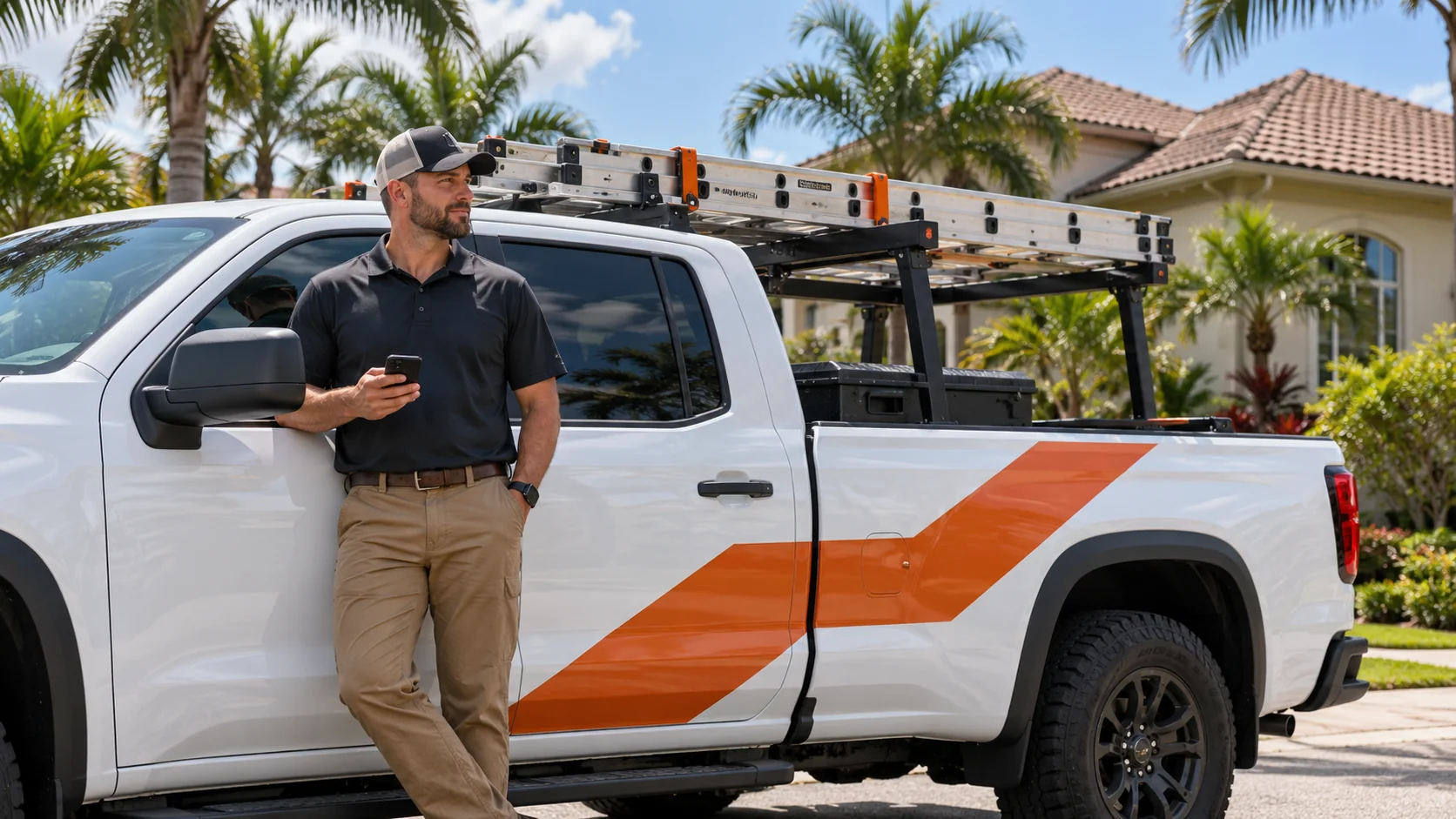
The vehicle layout would prioritize company identification, the roofing service and a contact route. Supporting information would remain secondary. The installer would advise on vehicle dimensions, surface constraints and proof requirements before fabrication.
The mobile homepage or relevant service entry would use the same approved identity and explain the service promptly. A visitor searching the name should not have to reconcile several unexplained versions before finding what the business does.
If a QR code is included for use while stationary, the team would test it on the final proof and keep the destination under the business's control. It would supplement readable information rather than become the only way to contact the company.
| Step | Proposed check | Evidence |
|---|---|---|
| See the vehicle | Read name, service and contact route | Approved installer proof |
| Search or visit | Recognize the same business | Mobile page and public listing review |
| Ask for help | Reach the correct staff route | Authorized form delivery test |
The acceptance review: test the complete route
Reviewers would check the physical proof at an agreed practical viewing position, then use a phone to find the business and request information. Observations would distinguish a hard-to-read vehicle from a confusing website destination. Each problem would have a responsible owner.
The website review would include the telephone link, request form and confirmation. The team would avoid placing unnecessary live calls during checks. An authorized delivery test would establish that a form reaches the right recipient.
Google Business Profile details would follow the real-world identity rules. The company name would not gain extra location or service keywords simply to resemble the vehicle message.
What would be measured after rollout
For roofing truck branding, a dedicated campaign destination or an optional how-did-you-hear field could provide partial context. Neither would capture every person who later searches the company name. Reports would avoid treating branded search growth as a precise count of truck-generated leads.
The office would record service fit and recurring confusion. If prospects still mention two different names, the team would review the remaining materials. A mixed rollout needs a clear explanation and a scheduled completion record.
This study claims no visibility or conversion result. The proposed deliverable is a coherent street-to-website route with readable artwork, accurate details and a verified handoff.
Questions roofing businesses ask
Is a full truck wrap required?
No. The right production method depends on the vehicle, visibility requirements and scope. Readable identification and accurate details come before the amount of printed coverage.
Can truck branding be credited for every branded search?
No. Branded searches can follow many interactions. Attribution should remain limited to the evidence collected.
RenForge Studio supports roofing and other service businesses with business website systems, branding, SEO and digital marketing. Explore branding and website service scope, or share your website and branding priorities to discuss a suitable next step.
Related practical resources
- Roofing Brand Consistency: Match Your Truck to Your Website
- Roofing Logo Design: Test It Small Before You Approve
- Roofing Branding and SEO: Measure Recognition Without Guessing
Sources and image note
The worksheets and proposed decisions above are original RenForge planning tools. The following sources support the branding, accessibility or search principles discussed.
- Google Business Profile: Guidelines for representing your business
- FRSA: Creating a Brand Identity for Your Roofing Company
Featured image: an original concept illustration for RenForge Studio. It does not document a verified client, completed installation or local property.