
Local SEO Services: Set Priorities Around Real Coverage
An illustrative local SEO services plan for Tampa Bay service businesses, connecting accurate coverage, useful pages and separate Maps and organic reviews. Planning example.
- Market
- Service Businesses
- Service
- Website Systems
- Year
- 2026
- Focus
- SEO Strategy
Local SEO services should reflect where a business actually works and what customers need there. This proposed Tampa Bay study plans a focused review for a home-service company receiving inquiries from outside its coverage. The aim is a more accurate search-to-service journey, with priorities the office can maintain.
Study status: This is a hypothetical planning example, not a completed client project. No measured client results are claimed.
The brief: distinguish a marketing wish from an operating area
The hypothetical company serves Tampa and selected nearby communities. Its website lists a much broader region, while the office declines requests from several of those places. The proposed discovery would begin with completed service records and the owner’s current coverage rules.
Coverage is not the same as an office location. The website would describe the actual arrangement and avoid suggesting a staffed branch where none exists. Any Business Profile review would use the business’s real facts and eligibility, not add a location to chase a map position.
The team would also separate two goals: being understandable in organic search and being eligible and relevant in local results. Google describes local ranking through relevance, distance and prominence. A service-area list does not remove the distance factor or guarantee placement.
Local SEO services: prioritize facts and useful page depth
First, the business would approve a coverage statement and service list. Those facts would be checked across the website and the profiles it controls. Contact details and hours would match actual operations. The office would own updates when coverage or availability changes.
Next, the team would decide which service and area pages provide enough distinct value to keep. A useful area page might explain a genuine access requirement, project example or service limitation the business can verify. A copied page with only the city name changed would not earn a place in this plan.
The original priority table below organizes the work by what can be confirmed. It is a proposed operating worksheet, not a claim that any one edit controls Google Maps. Website content would link visitors to the relevant service and show how to check coverage before sending a long request.
| Decision area | Proposed review |
|---|---|
| Business facts | Approve coverage, services, contact details and hours |
| Page usefulness | Keep distinct information the business can verify |
| Performance review | Separate organic, profile and inquiry-fit evidence |
Validation: review local visibility and inquiry fit separately
Before publishing, staff would test an inquiry from inside coverage and one from outside. The page and form should make the distinction clear without rejecting a visitor through an unexplained error. Any handoff would state whether the business can review the request.
After launch, the review would separate website search performance from Business Profile performance. The office would record the location and service fit of genuine inquiries. A broad rise in impressions would not automatically mean the company is reaching people it can help.
This illustrative study reports no profile change, new office or ranking result. The deliverable is a factual coverage plan, an accountable update process and a useful set of pages. For a local service business, relevance starts with an offer that matches the work the team can actually accept.
Practical acceptance checklist
- Confirm coverage with the people scheduling the work.
- Represent physical locations accurately.
- Avoid city pages that repeat the same content.
- Assign an owner to review business facts when they change.
RenForge Studio builds business website systems and provides branding, SEO and digital marketing support for roofing, contractors, HVAC, real estate and service businesses. Explore the service scope or share your website and priorities for review.
Related reading: A local service business SEO roadmap.
Sources and image note
Primary guidance used for the principles above. The planning worksheets and proposed workflows are original applications to the illustrative scenario.
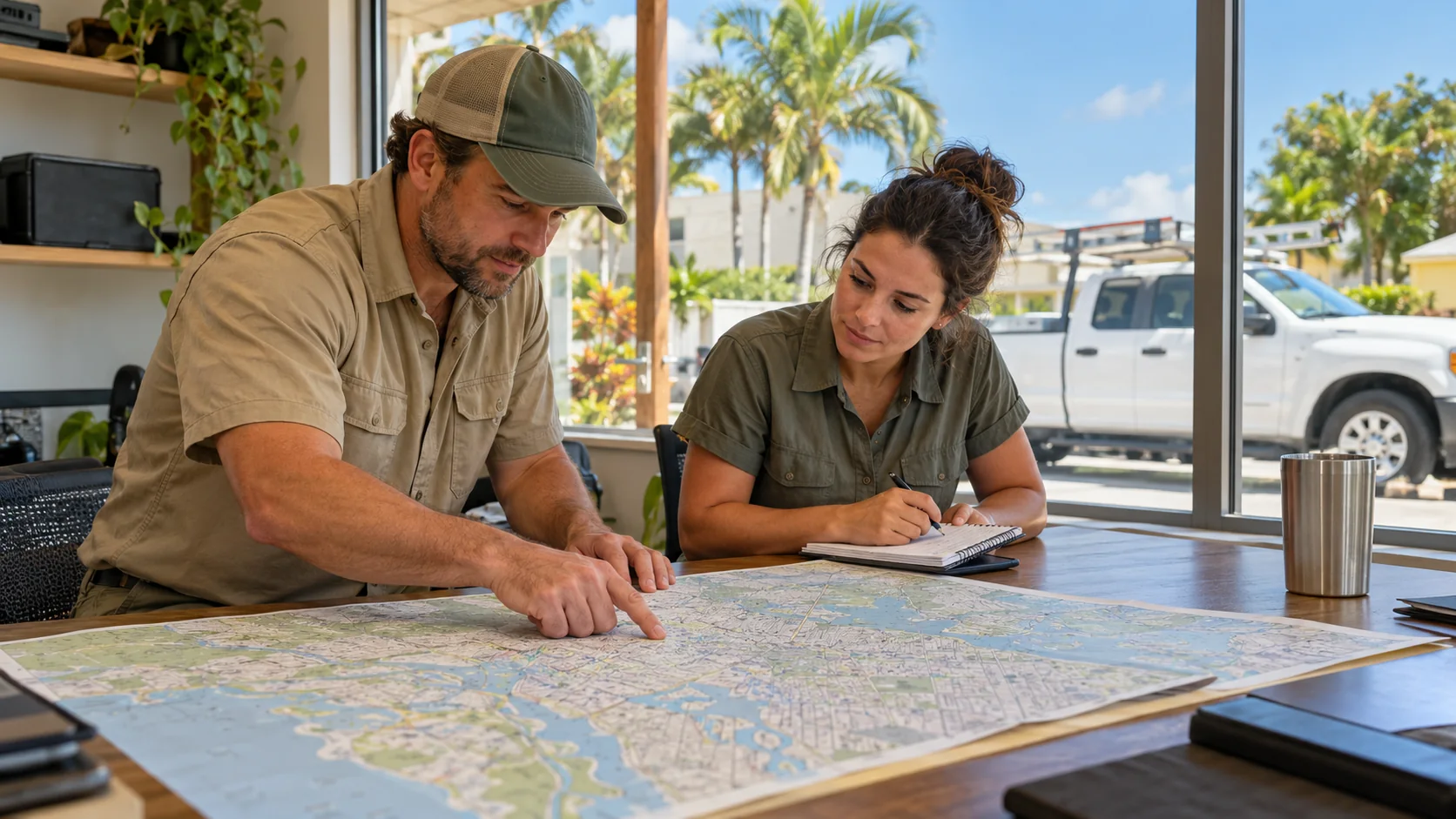
Featured image: an original photorealistic concept created for RenForge Studio. It illustrates the subject and does not depict a verified client, completed project or documented local property.